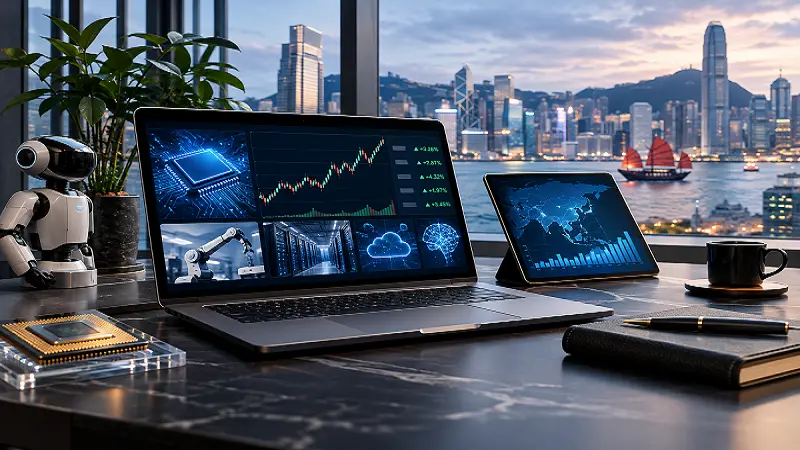
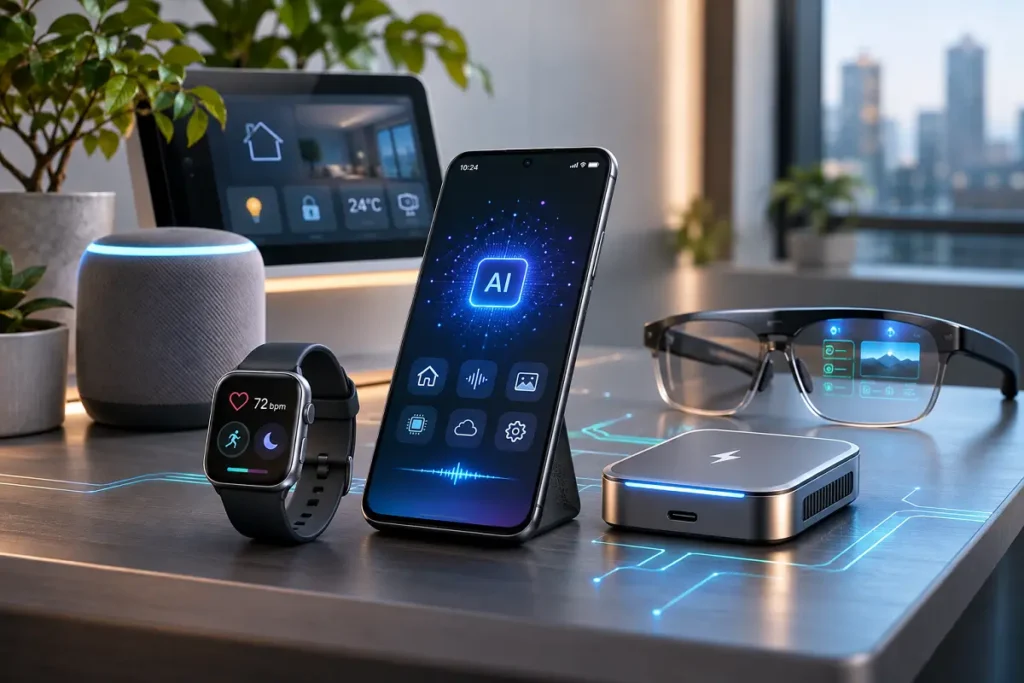
The technology behind everyday electronics is changing, and the logicalshout emerging trends electronics reshape topic highlights the innovations responsible for that transformation. Artificial intelligence, smarter sensors, advanced processors, connected devices, and energy-efficient components are changing how people communicate, work, monitor their health, and manage their homes. In 2026, electronics are becoming more intelligent, connected, and responsive to individual needs. Smartphones can handle certain AI tasks locally, smart home devices can communicate across different brands, and wearable gadgets can monitor an expanding range of health indicators.
However, not every new technology delivers immediate benefits. Some innovations are already practical, while others remain expensive, experimental, or limited to specialist applications. This guide explains nine important electronics trends, how they work, their benefits and limitations, and what consumers should consider before investing in new technology.
What Does LogicalShout Emerging Trends Electronics Reshape Mean?
The phrase logicalshout emerging trends electronics reshape refers to the broader discussion of how developing technologies are transforming electronic products and their everyday applications.
LogicalShout is a name associated with online technology content. Here, the phrase is used as a search topic rather than as the name of a formally established technology standard or verified industry research framework.
The central question is straightforward: Which electronics innovations are making a meaningful difference, and which are still developing?
Why Electronics Are Changing So Quickly
Four developments are contributing to this transformation.
- Artificial intelligence: Software can increasingly recognize patterns, interpret information, and automate routine tasks.
- Advanced semiconductor design: Modern processors deliver more computing capabilities within increasingly compact devices.
- Connectivity: Wireless networks and shared communication standards enable devices to exchange information.
- Energy efficiency: Improvements in components, charging systems, and product design help reduce unnecessary power consumption.
Industry research on consumer electronics in 2026 identifies AI, connectivity, and interoperability as influential trends, although costs and supply-chain pressures affect how quickly features reach buyers. Understanding these developments helps people distinguish useful innovation from expensive marketing claims.
9 Emerging Trends Reshaping Electronics in 2026
1. Artificial Intelligence and On-Device Processing
Artificial intelligence is among the most influential developments in consumer electronics. AI-enabled devices can perform tasks such as speech recognition, image enhancement, language translation, and intelligent search. Some features operate directly on the device, while others require an internet connection.
How on-device AI works
Traditional cloud-based AI sends information to remote servers for processing. On-device AI performs certain calculations through processors inside a smartphone, laptop, or other electronic product.
Many newer devices contain a neural processing unit (NPU), a specialized processor designed to handle AI-related calculations efficiently. The practical advantages can include:
- Faster responses for supported local tasks.
- Reduced reliance on an internet connection.
- Potentially better privacy when data remains on the device.
- More efficient handling of selected AI workloads.
For example, a compatible laptop might transcribe a recorded meeting locally without uploading the audio to an external server. However, local AI capabilities depend on the hardware, software, and individual features. An AI-enabled label does not mean every feature operates offline.
What matters in 2026: Memory costs and practical usefulness continue to influence the adoption of on-device AI. Consumers should prioritize features they will actually use.
2. Internet of Things and Smarter Homes
The Internet of Things, commonly called IoT, connects physical objects to networks so they can exchange information and perform useful tasks. Examples include smart lighting, security cameras, thermostats, connected appliances, and automated door locks.
A smart thermostat can adjust indoor temperatures according to a schedule. Connected sensors can detect movement, while smart plugs can help monitor electricity consumption.
Why Matter is important
One obstacle to smart home adoption has been compatibility between competing brands. The Matter interoperability standard aims to simplify communication between supported smart home products.
Matter 1.5, released in November 2025, expanded the specification to include cameras and additional energy-management capabilities. Matter 1.5.1 followed in March 2026 with improvements relevant to cameras and doorbells, according to the Connectivity Standards Alliance.
This creates opportunities for consumers to build more flexible connected homes. Nevertheless, support differs across products and platforms. A device supporting Matter does not automatically guarantee that every advertised feature will work with every smart home controller.
Practical tip: Check the device’s certification, supported functions, and compatibility with existing equipment before purchasing.
3. Wearable Technology and Health Monitoring
Wearable electronics have developed beyond basic step counters. Smartwatches, fitness trackers, and smart rings can collect information about movement, sleep patterns, heart rate, and other measurements. Some medical-oriented features have also introduced more sophisticated monitoring possibilities.
Everyday benefits of wearable technology
Wearable electronics can help users:
- Monitor exercise frequency and daily movement.
- Understand personal sleep patterns.
- Receive selected heart-related notifications.
- Track fitness goals over time.
- Access important notifications without checking a smartphone.
For example, someone beginning a fitness routine might use a smartwatch to compare activity patterns over several weeks. However, measurement reliability varies depending on the sensor, product, and intended application.
The U.S. Food and Drug Administration has warned against relying on smartwatches or smart rings claiming to measure blood glucose independently without piercing the skin. Such devices have not received FDA authorization for that purpose.
Wearable health measurements should therefore be interpreted according to the device’s validated capabilities, not treated automatically as medical diagnoses.
4. Advanced Semiconductors and Chip Design
Semiconductors are the foundation of modern electronic devices. They enable processors, memory, sensors, communications equipment, and power-management systems to operate.
As demand for computing increases, manufacturers are working on ways to improve chip performance while managing energy consumption and manufacturing costs.
Chiplets and advanced packaging
One developing approach involves chiplets, which are smaller semiconductor components combined within a single package. Instead of placing every function on one large piece of silicon, manufacturers can integrate specialized components through advanced packaging techniques.
This approach can offer greater design flexibility and potentially improve manufacturing efficiency for certain types of processors. Advanced packaging is especially important for high-performance computing and AI hardware, where processors need rapid access to large amounts of data.
For ordinary users, these developments may eventually translate into more capable laptops, smartphones, and electronic systems. Semiconductor improvements do not always produce immediate reductions in retail prices; manufacturing complexity, memory costs, and supply constraints remain important.
5. Gallium Nitride and Silicon Carbide Electronics
Not every electronics breakthrough involves AI or software. Some of the most useful improvements come from materials that control electrical power more efficiently. Two important examples are gallium nitride (GaN) and silicon carbide (SiC).
What makes these materials different?
Both belong to a class of materials used in wide-bandgap power semiconductors. They can offer advantages over conventional silicon in selected applications, including high-temperature operation, faster switching, and reduced power losses.
| Material | Common applications | Main advantages |
| Silicon | Traditional electronic components | Established, cost-effective manufacturing |
| Gallium nitride (GaN) | Compact chargers and power supplies | High switching efficiency and compact designs |
| Silicon carbide (SiC) | Electric vehicle inverters and industrial systems | High-voltage and high-temperature performance |
The U.S. Department of Energy identifies SiC and GaN as important materials for improving power electronics efficiency and performance.
How this affects consumers
GaN technology is already used in compact USB-C chargers that can power compatible phones, tablets, and laptops. SiC is particularly relevant to electric vehicles, renewable-energy equipment, and high-power electrical systems.
Material selection is only one factor. Charger safety, manufacturing quality, supported charging protocols, and compatibility are equally important.
6. Next-Generation Displays and Smart Glasses
Displays remain a major area of electronics innovation. Manufacturers are developing improvements in brightness, energy efficiency, flexibility, and visual quality.
OLED technology has become established in several premium consumer product categories, while MicroLED remains a promising but comparatively expensive display technology. Smart glasses are also introducing new ways to interact with digital information.
Why smart glasses matter
Certain smart glasses can capture photos, provide audio assistance, or support hands-free interactions. More advanced augmented-reality concepts aim to place digital information within the user’s field of view.
Potential applications include navigation, training, maintenance, and accessibility. Imagine a technician viewing equipment instructions without repeatedly looking down at a laptop or printed manual.
Although the concept is useful, practical limitations remain. These include battery life, comfort, heat management, privacy, and price. Industry assessments in 2026 suggest that adoption is progressing more slowly than some earlier expectations.
The key takeaway: Smart glasses deserve attention, but they should not yet be treated as an inevitable replacement for smartphones.
7. Flexible and Printed Electronics
Most people imagine electronics as rigid circuit boards containing processors and other components. Flexible electronics take a different approach. They use materials and structures that allow selected electronic components to bend, stretch, or fit irregular surfaces.
Printed electronics can use specialized manufacturing processes to deposit conductive materials onto suitable substrates.
Potential applications
Flexible and printed electronics are relevant to several industries:
- Healthcare patches containing electronic sensors.
- Foldable and curved display assemblies.
- Smart clothing and wearable monitoring devices.
- Industrial sensors attached to unconventional surfaces.
- Packaging that contains identification or monitoring components.
For example, a flexible sensor could be integrated into a medical patch to gather measurements while allowing greater freedom of movement. However, there is a difference between a flexible component and an entirely flexible electronic product.
Many applications are still being developed, and commercial success depends on durability, performance, manufacturing costs, and reliability.
8. Sustainable and Repairable Devices
Sustainability has become an increasingly important consideration in electronics manufacturing. Frequent product replacement creates demand for additional materials and contributes to electronic waste.
The International Telecommunication Union reported that approximately 62 million tonnes of electronic waste were generated worldwide in 2022, with only 22.3% documented as formally collected and recycled in an environmentally sound manner. These figures show why product lifespan and responsible disposal deserve attention.
How electronics are becoming more sustainable
Manufacturers and policymakers are exploring several approaches.
- Longer software support periods.
- Replaceable batteries and accessible spare parts.
- More energy-efficient components.
- Improved product repairability.
- Recycling and recovery of valuable materials.
A regulatory example comes from the European Union. Requirements applying from June 20, 2025, address durability, repair, and energy efficiency for covered smartphones and tablets. They include rules concerning spare-part availability, battery durability, and software support.
For consumers, keeping a reliable device for an additional year may provide more value than upgrading solely for a small performance improvement.
9. Cybersecurity and Privacy in Connected Devices
As electronic products become connected, cybersecurity becomes more important. Smart cameras, connected appliances, routers, and other IoT products can store or transmit sensitive information.
Poorly secured devices may expose users to unauthorized access, data-collection risks, or disruptions.
Important security features to check
Before purchasing a connected electronic device, consumers should examine its security protections. Useful features include automatic security updates, secure account authentication, appropriate encryption, and clear privacy settings.
Users should also replace default passwords when applicable and enable multifactor authentication where available. Another important consideration is how long the manufacturer commits to supporting the product.
A smart device might remain physically functional for years while losing important security protection when updates end. Software support is part of a product’s practical lifespan, especially for devices connected to the internet.
Comparison of the Biggest Electronics Trends
The following table summarizes where each technology stands and how it may benefit users.
| Electronics trend | Consumer benefit | 2026 maturity |
| On-device AI | Faster local processing for supported tasks | Growing adoption |
| IoT and Matter | Connected, interoperable homes | Established and expanding |
| Wearable technology | Fitness and selected health monitoring | Established and evolving |
| Advanced semiconductors | Better computing capabilities | Established with continuing innovation |
| GaN and SiC | Efficient power conversion | Commercially established in selected uses |
| Smart glasses | Hands-free digital interactions | Developing |
| Flexible electronics | New wearable and sensor designs | Mixed, often specialized |
| Sustainable design | Longer product life and repair options | Increasingly important |
| IoT cybersecurity | Improved privacy and device protection | Essential ongoing requirement |
Note: These are qualitative maturity assessments based on the applications discussed, not a statistical market forecast.
The comparison reveals an important pattern: some technologies already have everyday applications, while others require further development before becoming practical for most buyers.
How Emerging Electronics Trends Affect Everyday Life
These developments are not limited to research laboratories or large technology companies. They are gradually changing how households, businesses, and public services use electronic equipment.
Benefits for Consumers
Consumers may experience improvements in convenience, productivity, accessibility, and energy management. A smartphone with supported on-device AI features can help process information. Smart home automation can reduce repetitive household tasks, while a fitness tracker can help someone review activity patterns.
The most useful improvements are often small and practical rather than dramatic. A reliable charger, longer-lasting laptop, or compatible smart home sensor may provide more everyday value than an experimental gadget.
Opportunities for Businesses
Businesses can use connected sensors, automation, and electronic monitoring systems to improve operations. A warehouse might use sensors to monitor temperature-sensitive inventory. A manufacturing facility might use electronic measurements to identify unusual equipment behavior before a major failure occurs.
These systems can support better decisions, but success requires appropriate installation, dependable data, staff training, and maintenance. Businesses should evaluate expected return on investment instead of assuming every new technology automatically reduces costs.
How to Choose Future-Ready Electronics
Understanding new technology is helpful. Knowing how to evaluate it before purchasing is even more valuable.
A Practical Buying Checklist
- Define the problem the device must solve.
- Check compatibility with existing equipment and software.
- Compare independent tests and real performance measurements.
- Verify security-update and software-support commitments.
- Investigate battery life, repairability, and spare-part availability.
- Calculate total ownership costs, including subscriptions and accessories.
- Choose proven benefits over features you may never use.
Evaluate ownership costs, not just purchase prices
A cheaper device may become more expensive if it requires paid subscriptions, proprietary accessories, or frequent replacement. Similarly, a premium device may offer better long-term value if it receives updates for more years and can be repaired affordably.
A practical comparison should consider the product’s expected lifespan and essential features, not simply its advertised specifications.
A Real-World Smart Home Example
Consider someone planning to automate lighting in a small house. They could purchase smart bulbs, switches, or plugs without checking compatibility. However, the products might require separate apps, accounts, or communication hubs.
A more organized approach would begin by selecting a compatible smart home ecosystem and checking which products support the required functions. The homeowner could then automate lighting according to a schedule and expand the system gradually.
This approach reduces unnecessary purchases and makes troubleshooting easier. It also demonstrates how electronics innovation delivers the most value when supported by thoughtful planning.
Challenges, Risks, and Common Misconceptions
High development and purchase costs
Advanced processors, sensors, and manufacturing processes can increase product costs. Early adopters sometimes pay substantially more for features that later become available in affordable devices.
Privacy and data collection
Connected electronics may collect information about user activity, location, voice commands, or household routines. Consumers should understand what information their devices collect, where it is processed, and whether it is shared with third parties.
Compatibility problems
Different wireless standards, proprietary applications, and software ecosystems can limit interoperability. Buyers should confirm that a device supports their specific setup rather than relying on broad claims of compatibility.
Common misconceptions
One misconception is that every AI-powered device performs all its tasks without internet access. In reality, many products combine local and cloud processing.
Another misconception is that smart technology always saves electricity. Actual savings depend on how a device is used, its standby consumption, and whether automation reduces unnecessary power usage.
A third mistake is assuming a newer product is automatically more durable or sustainable. Repairability, manufacturer support, and expected lifespan provide a more meaningful comparison.
Frequently Asked Questions
What is logicalshout emerging trends electronics reshape?
The phrase relates to information about emerging technologies that are transforming electronic devices. Major topics include AI, smart homes, advanced chips, connected wearables, energy efficiency, and sustainable electronics.
Which electronics trend is most important in 2026?
Artificial intelligence and connected-device interoperability are particularly influential. However, the most important trend for an individual depends on whether they need better productivity, smart home features, energy efficiency, or another practical benefit.
How is artificial intelligence changing electronics?
AI enables selected devices to recognize patterns, interpret speech, enhance images, and automate tasks. Specialized processors increasingly allow some functions to operate locally instead of depending entirely on remote servers.
What is the future of wearable electronics?
Wearable devices are likely to continue improving their sensors, processing capabilities, and connectivity. Their usefulness depends on measurement accuracy, comfortable designs, battery life, and validated applications.
Can smart electronics reduce electricity consumption?
Yes, certain devices can help identify waste or automate energy usage. However, results depend on device efficiency, installation, operating conditions, and individual behavior.
Are flexible electronics available commercially?
Yes. Flexible components are already used in selected products, including certain displays and sensors. More ambitious fully flexible systems remain under development.
Should I upgrade to AI-powered electronics now?
Upgrade when a new product solves a real problem or provides a meaningful improvement over your existing device. There is little reason to replace functioning equipment solely because a manufacturer advertises AI features.
Will sustainable electronics become more important?
Product durability, repairability, energy efficiency, and recycling are likely to remain important. Growing electronic waste and regulatory requirements are increasing attention to how products are manufactured, maintained, and disposed of.
Final Thoughts
The logicalshout emerging trends electronics reshape topic illustrates how artificial intelligence, connectivity, semiconductor innovation, and sustainable design are influencing the next generation of electronic products. Some developments, including GaN chargers, AI-assisted smartphones, and connected home equipment, already offer practical benefits. Others, such as advanced smart glasses and emerging flexible electronic systems, still face technical and commercial challenges. The future of electronics will not be determined by one invention. It will emerge from improvements in hardware, software, connectivity, security, and responsible manufacturing. For consumers, the most effective approach is to focus on practical needs, independent evidence, compatibility, and long-term value.
The best electronic device is not necessarily the newest or most expensive. It is the one that reliably solves a problem and continues delivering value over time.
For more information, please visit my website: myfastbroker